SCHEDULE A CALL
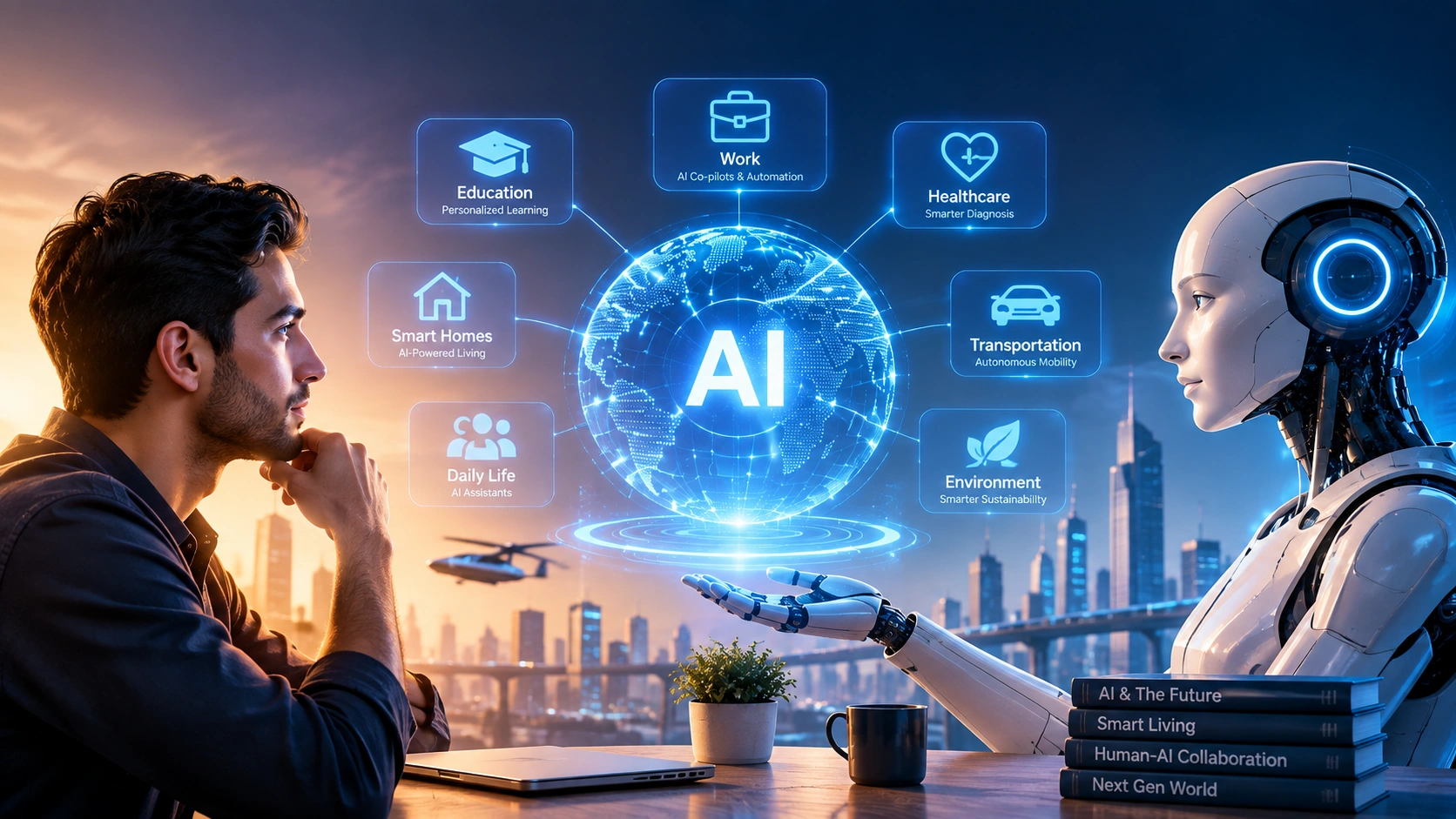

Artificial intelligence is no longer something people associate only with science fiction or advanced research labs. It has become part of everyday life. From personalized recommendations on streaming platforms to AI assistants that help organize work schedules, intelligent technology is changing how people live, communicate, learn, and work.
As AI becomes more capable, one question continues to appear across search engines and technology forums:
How will AI change human life in the future?
For professionals working in software development, information technology, and digital businesses, this question is even more important. AI is transforming industries, creating new opportunities, and changing the skills people need to succeed. At the same time, it is encouraging individuals to rethink productivity, work dedication, creativity, and lifelong learning.
This article explores how AI is shaping the future of human life, what it means for the technology industry, and why balancing innovation with human values will be essential for long-term success.
AI Is Becoming Part of Everyday Life
Artificial intelligence is quietly influencing many daily activities. Whether people are shopping online, navigating traffic, managing finances, or receiving healthcare recommendations, AI is often working in the background.
Consumers now expect digital experiences that are faster, smarter, and more personalized.
According to the PwC Global Artificial Intelligence Study, AI has the potential to contribute $15.7 trillion to the global economy by 2030, making it one of the largest commercial opportunities in modern history.
This demonstrates that AI is not simply another technology trend. It is becoming a foundation for future economic growth.
The Evolution of Work in an AI Driven World
AI Is Transforming Jobs, Not Eliminating Human Potential
One of the biggest concerns people have is whether AI will replace human workers.
The reality is more balanced.
AI is increasingly automating repetitive and time-consuming tasks, allowing people to focus on activities that require creativity, strategic thinking, communication, and problem solving.
According to the World Economic Forum Future of Jobs Report 2025:
86% of employers expect AI and information processing technologies to transform their businesses.
77% plan to reskill or upskill employees so they can work effectively with AI technologies.
This highlights an important shift. Businesses are investing in people who can work alongside AI rather than replacing human expertise entirely.
How AI Is Changing Productivity
Working Smarter Instead of Working Longer
Technology professionals often manage multiple responsibilities, including development, testing, documentation, communication, and project planning.
AI helps simplify these tasks by:
Automating repetitive processes
Organizing information faster
Supporting software development
Improving project planning
Assisting with research and documentation
This allows professionals to spend more time solving complex problems and creating innovative solutions.
According to the Microsoft Work Trend Index, 75% of knowledge workers already use AI at work, showing how rapidly AI is becoming part of everyday professional life.
Human Focus Will Become More Valuable
Technology Makes Attention More Important
Although AI improves efficiency, it also increases the amount of information people receive every day.
Notifications, digital assistants, analytics dashboards, and constant online communication make focused thinking more difficult.
As technology evolves, one of the most valuable human skills will be the ability to concentrate deeply on meaningful work.
Successful technology professionals increasingly practice:
Deep work sessions
Digital boundaries
Intentional technology usage
Continuous learning
Structured problem solving
AI can enhance productivity, but focus remains a uniquely human advantage.
The Software Industry Is Entering a New Era
Software development is evolving rapidly because of AI.
Developers now use intelligent tools to:
Generate code suggestions
Identify software bugs
Improve application security
Accelerate testing
Optimize deployment
According to the Stack Overflow Developer Survey 2025, 78.5% of developers use AI tools during software development, while 47.1% use them every day.
Rather than replacing developers, AI is becoming a collaborative assistant that improves productivity and reduces repetitive work.
AI and Business Innovation
Businesses across the United States and around the world are investing heavily in AI to improve customer experiences and operational efficiency.
Modern organizations are using AI to:
Personalize customer interactions
Improve forecasting
Detect cybersecurity threats
Automate repetitive workflows
Analyze large volumes of business data
According to McKinsey's State of AI Report, 78% of organizations now use AI in at least one business function, reflecting continued growth in enterprise adoption.
Human Skills Will Become Even More Important
As AI becomes more capable, technical knowledge alone will not define success.
Future careers will increasingly depend on skills that technology cannot easily replicate, including:
Critical Thinking
Understanding context, evaluating complex situations, and making responsible decisions.
Creativity
Generating original ideas and building innovative products.
Emotional Intelligence
Building relationships, collaborating effectively, and understanding customer needs.
Adaptability
Learning continuously as technology evolves.
The future belongs to professionals who combine technical expertise with human-centered thinking.
Ethical AI Will Shape Consumer Trust
People increasingly expect companies to use AI responsibly.
Organizations must ensure:
Transparent AI systems
Responsible data collection
Privacy protection
Fair decision making
Human oversight
Businesses that build trustworthy AI systems will strengthen customer confidence and long-term relationships.
Responsible innovation will become just as important as technological innovation.
Preparing for an AI Driven Future
The future of human life will not be defined by technology alone.
It will be shaped by how people choose to use technology.
Individuals who remain curious, continue learning, strengthen their focus, and embrace change will be better prepared for future opportunities.
Businesses that combine AI with human creativity, collaboration, and ethical leadership will be better positioned for sustainable growth.
Technology continues to evolve, but human values remain the foundation of meaningful innovation.
Conclusion
Artificial intelligence is transforming the way people live, work, and interact with the digital world. From software development and business operations to education and healthcare, AI is becoming an essential part of modern life.
The future is not about humans competing with machines. It is about humans using intelligent technology to solve bigger problems, improve productivity, and create new opportunities.
For professionals in the software and IT industry, success will come from combining technical expertise with creativity, continuous learning, and strong human judgment.
As AI continues to advance, the most valuable advantage will not simply be access to technology. It will be the ability to use that technology thoughtfully, responsibly, and with purpose.