SCHEDULE A CALL
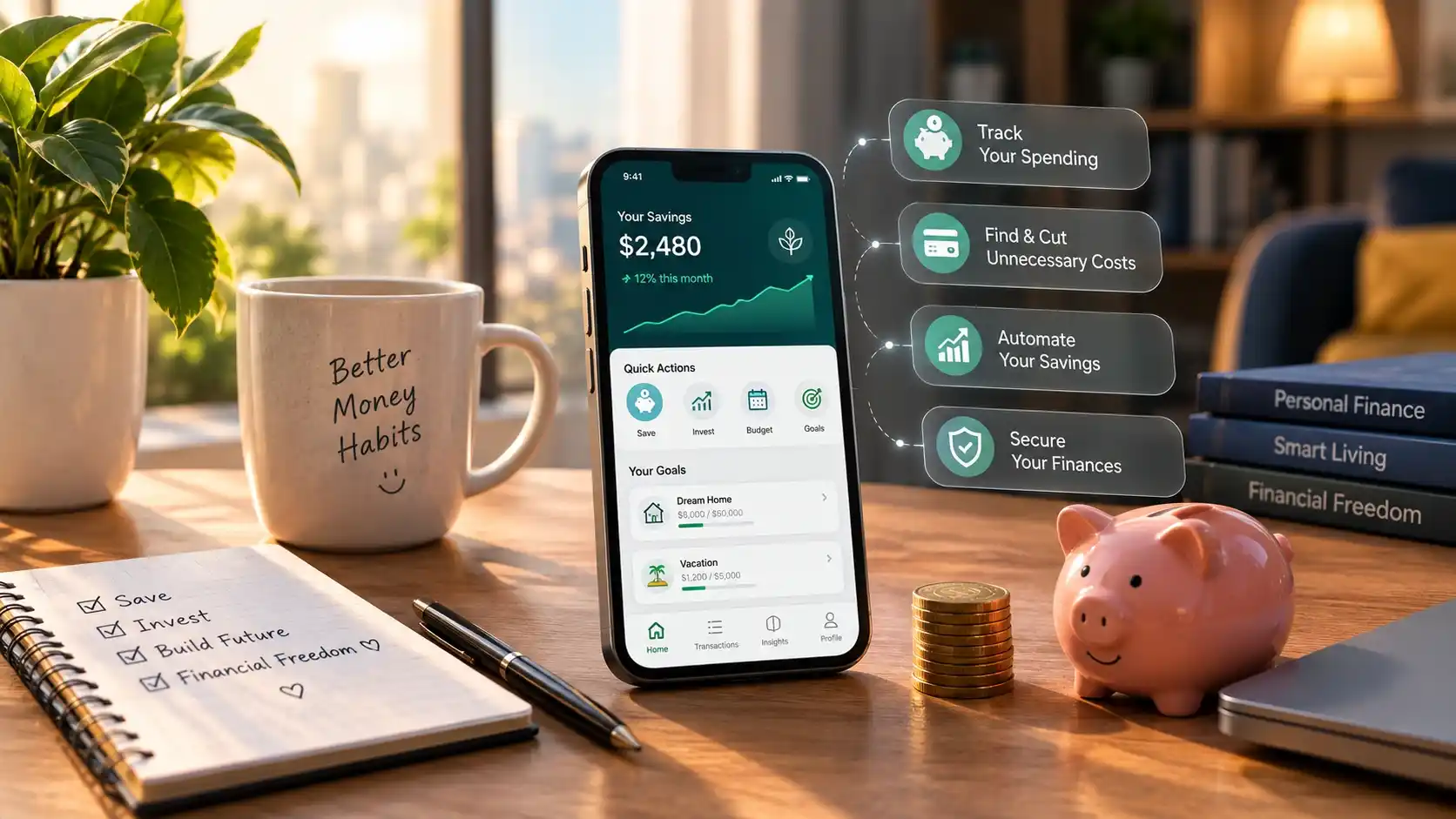

Managing money has become increasingly digital. From checking a bank balance to tracking subscriptions, paying bills, or setting aside money for an emergency, many everyday financial tasks can now be handled through a smartphone.
For busy professionals, entrepreneurs, and people working in technology-driven industries, this convenience can make a real difference. Instead of spending hours reviewing spreadsheets or trying to remember where money went, smart finance apps can organize financial information and turn it into something easier to understand.
The bigger question is simple: Can finance apps actually help people save more money?
The answer depends on how they are used. A good app cannot create better financial habits on its own, but it can make those habits easier to build and maintain.
Why More People Are Looking for Smarter Ways to Manage Money
Financial pressure is not limited to people with low incomes. Even professionals with stable careers can find it difficult to keep track of subscriptions, unexpected expenses, investments, credit payments, and everyday spending.
Recent Federal Reserve data shows why financial planning remains important in the United States. In its latest household economic well-being report, 63% of US adults said they could cover a hypothetical $400 emergency expense using cash, savings, or a credit card paid off with the next statement. At the same time, 59% reported having at least one major unexpected expense during the previous year.
This creates a practical need for better financial organization.
Smart finance apps are becoming one way consumers can gain a clearer picture of their money without turning financial management into a full-time task.
What Makes a Finance App "Smart"?
Not every finance app offers the same experience. Traditional budgeting apps may simply record income and expenses, while newer platforms use automation, data analysis, and artificial intelligence to provide more personalized insights.
Smart finance apps can help users:
Categorize spending automatically
Track recurring payments
Set savings goals
Monitor budgets
Identify unusual spending
Provide financial reminders
Analyze spending patterns
Connect information from multiple accounts
The goal is not simply to show users how much money they have. It is to help them understand how they use their money.
How Finance Apps Can Help You Save More
1. Automatic Expense Tracking
One of the biggest problems with budgeting is consistency.
People may create a budget at the beginning of the month and forget to update it a few days later. Automated finance apps can connect with financial accounts and categorize transactions, reducing the need for manual entry.
This makes it easier to notice patterns such as frequent restaurant spending, unused subscriptions, or impulse purchases.
The benefit is not the technology itself. The benefit is visibility.
When people can clearly see where their money is going, they can make better decisions about where to reduce spending.
2. Smarter Budgeting
Modern budgeting tools can go beyond simple spending limits.
Some platforms analyze previous transactions and help users create realistic spending categories. Others can show how a particular purchase might affect the rest of the month.
This can be especially useful for technology professionals and business owners whose income or expenses may change from month to month.
A realistic budget is easier to follow than an overly restrictive one.
3. Subscription Management
Digital lifestyles have created another financial challenge: subscriptions.
Streaming platforms, cloud storage, software tools, memberships, productivity applications, and other recurring services can quietly consume a significant amount of money.
Finance apps can help identify recurring payments and make them easier to review.
A simple monthly check can reveal services that are rarely used.
For someone managing several digital subscriptions, removing even a few unnecessary payments can create meaningful savings over time.
AI Is Making Finance Apps More Personalized
Artificial intelligence is becoming an important part of the next generation of financial technology.
Instead of simply displaying numbers, AI-powered systems can analyze spending behavior and identify patterns that may otherwise be easy to miss.
For example, an intelligent financial tool might recognize that a user's spending increases during certain periods of the month or that several small purchases are creating a larger monthly expense.
Some newer finance platforms are also combining AI with personalized financial guidance and human support, showing how consumer finance is moving toward more customized digital experiences.
This reflects a broader technology trend: consumers increasingly expect software to understand context rather than simply display information.
Saving Money Without Constantly Thinking About Money
One of the biggest lifestyle benefits of financial technology is automation.
Instead of relying entirely on motivation, users can establish automated habits such as:
Scheduled transfers to savings
Automatic bill payments
Savings targets
Spending alerts
Recurring investment contributions
Automation can reduce the number of financial decisions people need to make every day.
This matters for busy professionals because mental attention is limited. Managing money should not require constant checking and calculation.
The best technology quietly handles routine tasks while allowing people to focus on work, family, career development, and other priorities.
The Connection Between Financial Focus and Productivity
Money-related stress can affect concentration.
For someone working in software development, IT, business management, or another demanding profession, constantly worrying about upcoming bills or unexpected expenses can become a distraction.
A clearer financial system can provide a sense of control.
This does not mean an app can eliminate financial stress. Instead, it can help turn vague concerns into visible information.
Knowing how much is available, what expenses are coming, and whether savings goals are progressing can make financial decisions more structured.
That clarity can support a healthier digital lifestyle.
Security and Privacy Matter
There is an important issue that consumers should not overlook.
Finance apps often handle sensitive information, so convenience should never be the only factor when choosing one.
Before connecting financial accounts, users should consider:
What data does the app collect?
How is information protected?
Does the service explain how data is used?
What security features are available?
Can account access be removed easily?
This is particularly important as more financial applications incorporate AI and automated analysis.
Technology should make financial management easier without encouraging users to ignore privacy and security.
Are Finance Apps Really Worth Using?
A finance app is not automatically useful simply because it has advanced features.
The right tool should make financial management simpler, not more complicated.
For some people, a basic budgeting application may be enough. Others may benefit from automated categorization, investment tracking, subscription monitoring, or AI-powered insights.
The important question is not:
"Which finance app has the most features?"
It is:
"Which tool helps me consistently make better financial decisions?"
Common Mistakes to Avoid
Relying Completely on Automation
Automation is helpful, but users should still review their accounts regularly.
Using Too Many Financial Apps
Having several apps for budgeting, investing, subscriptions, bills, and savings can create another form of digital clutter.
Ignoring Security
Never sacrifice financial security simply for convenience.
Expecting Technology to Fix Spending Habits
An app can identify a problem, but the user still has to make the decision to change it.
The Future of Digital Money Management
Financial technology is moving toward increasingly personalized experiences.
Future finance platforms are likely to combine budgeting, financial education, intelligent recommendations, automated savings, and personalized insights within more unified experiences.
The broader trend is clear: technology is moving from simply recording financial activity toward helping people understand and manage it.
For professionals living and working in a highly digital environment, this evolution could make financial management feel less like another responsibility and more like an automated part of everyday life.
Conclusion
Smart finance apps can help people save more money, but their greatest value may be the clarity they provide.
By automatically tracking expenses, identifying spending patterns, managing subscriptions, supporting savings goals, and using AI to provide more personalized insights, financial technology can make money management easier and more consistent.
For technology professionals, entrepreneurs, and digitally connected consumers across the United States and global markets, the goal should not be to use more financial technology. It should be to use the right technology intentionally.
When technology reduces financial confusion instead of adding to it, saving becomes less about constant effort and more about building sustainable habits.
Research Sources
Federal Reserve, Report on the Economic Well-Being of U.S. Households: current data on emergency expenses, savings, and household financial conditions.
Federal Reserve, Emergency Savings Data: historical and current data on the share of adults with three months of emergency savings.
Kiplinger, Best Budgeting Apps: current overview of budgeting and financial management applications.
Business Insider, coverage of AI-powered personal finance applications and personalized financial technology.
Suggested Images and Copyright Information
1. Person managing finances through a smartphone
Suggested source: Unsplash
License: Unsplash License
2. Digital budgeting or financial dashboard
Suggested source: Pexels
License: Pexels License
3. AI-powered personal finance concept
Suggested source: Pixabay
License: Pixabay Content License
Before publication, verify the individual image's current license and download the image directly from the original source page.