SCHEDULE A CALL


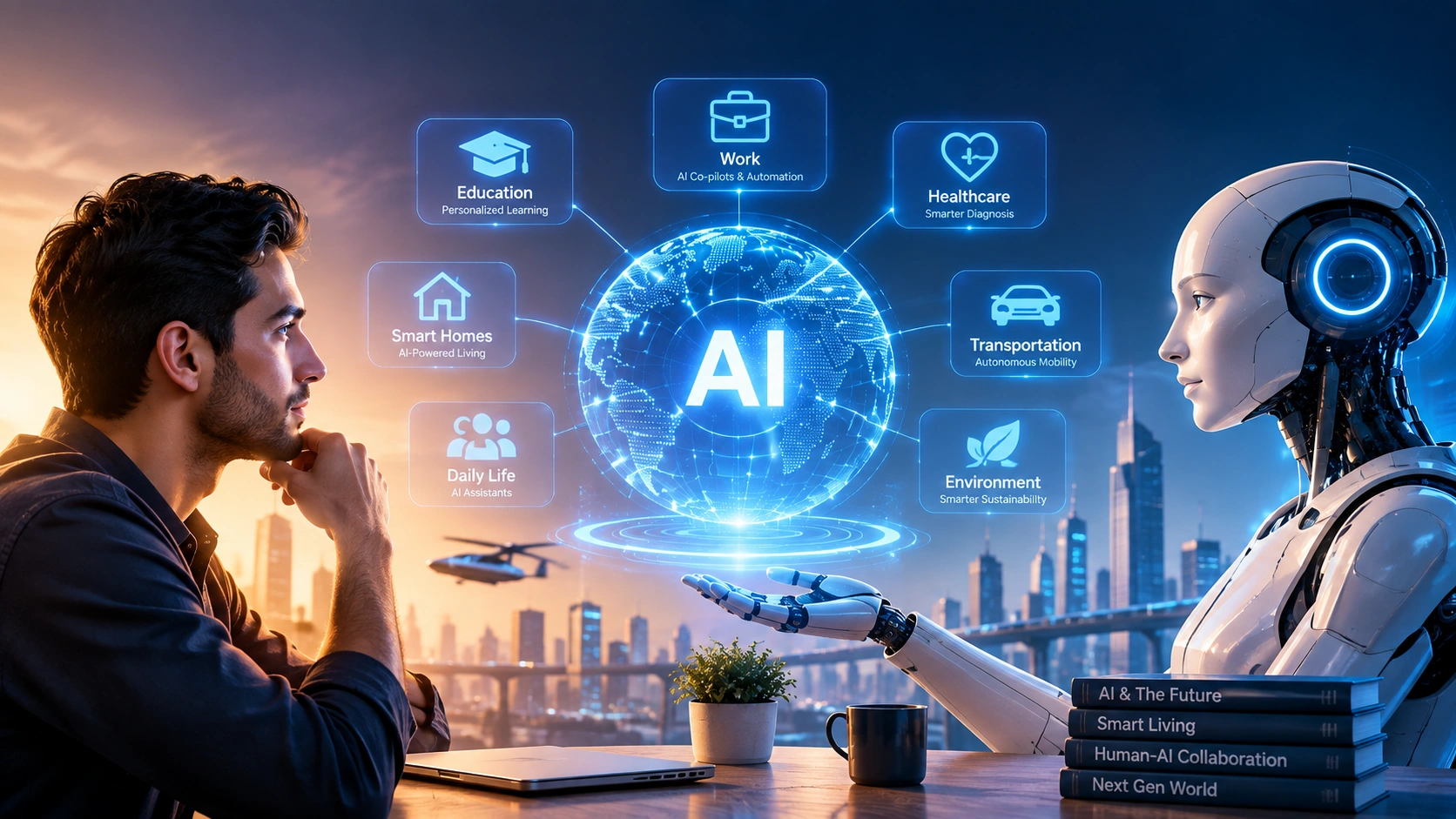
Imagine needing to write an important email, solve a difficult problem, make a business decision, or even plan your day. Instead of thinking through the situation yourself, you immediately open an AI tool and ask for an answer.
It saves time. It reduces effort. And quite often, it provides a useful result.
But here is an important question: When technology starts doing more of our thinking, are we becoming better problem-solvers, or are we gradually losing the habit of thinking independently?
Technology has become part of almost every aspect of modern life. From smartphones and navigation apps to AI assistants and automated business systems, digital tools help us work faster and make everyday tasks easier. For software developers, IT professionals, entrepreneurs, and business leaders, these tools can be especially valuable.
However, convenience also comes with responsibility. Understanding when to rely on technology and when to use our own judgment is becoming an essential skill in a digitally connected world.
How Technology Is Changing the Way We Think
Technology does more than help us complete tasks. It also influences how we find information, solve problems, remember details, and make decisions.
Think about how people used to remember phone numbers, read physical maps, or search through books for answers. Today, smartphones, search engines, and AI assistants handle many of these activities within seconds.
This is not necessarily a bad thing. Using external tools to save mental effort is a normal part of human behavior. The challenge begins when we stop questioning information simply because a digital tool provides it.
The Rise of AI-Assisted Thinking
Artificial intelligence has made it easier to generate ideas, summarize lengthy documents, write content, analyze information, and solve technical problems.
For example, a software developer can use an AI assistant to understand unfamiliar code. A business owner can explore market opportunities, while a marketing professional can generate campaign ideas in minutes.
These applications can support creativity and productivity. However, if users accept every response without checking its accuracy or considering alternative solutions, they may miss opportunities to develop their own analytical skills.
The goal should not be to avoid AI. It should be to use AI in a way that strengthens human thinking instead of replacing it.
What Research Says About AI and Independent Thinking
Concerns about technology and independent thinking are not simply based on personal opinions. Research is beginning to examine how AI-assisted work influences the way people approach problems and evaluate information.
According to a Pew Research Center survey published in September 2025, 50% of U.S. adults said they were more concerned than excited about the increased use of AI in daily life. The same research found that approximately half of Americans believed AI would worsen people's ability to think creatively and form meaningful relationships.
The survey included 5,023 U.S. adults, making it a useful indicator of public attitudes toward AI. However, these figures measure people's opinions, not proof that AI has reduced their thinking abilities.
Another important study, published at the 2025 ACM CHI Conference on Human Factors in Computing Systems, examined AI use among 319 knowledge workers and analyzed 936 examples of AI-assisted work.
The researchers found that greater confidence in AI was associated with less reported critical-thinking effort. They also observed that AI shifted some of the work from producing information toward checking, evaluating, and integrating AI-generated responses.
This finding highlights an important distinction: using AI can reduce the effort required to complete a task, but users still need to judge whether the result is accurate and appropriate.
The Hidden Cost of Convenience
Convenience is one of technology's greatest advantages. Yet when every task has an instant digital solution, people may become less willing to spend time working through difficult problems.
1. Reduced Problem-Solving Practice
Learning to solve problems requires practice. When people attempt a challenge, make mistakes, consider different approaches, and try again, they develop experience that helps them handle similar situations in the future.
If an AI tool provides the complete answer immediately, users may finish the task without understanding the reasoning behind it.
This can be particularly important for students, junior developers, and professionals learning a new technical skill.
For example, a developer who copies AI-generated code without understanding its logic might complete a feature quickly but struggle to debug it when something goes wrong.
A better approach is to ask AI to explain the solution, identify possible weaknesses, and suggest alternative methods.
2. Too Much Information, Not Enough Understanding
Digital platforms provide access to enormous amounts of information. However, access to information is not the same as understanding it.
Reading an AI-generated summary may save time, but it does not always provide the depth required to evaluate a complex subject.
Professionals should make time to read original sources, compare different perspectives, and ask follow-up questions when a topic matters.
3. Dependence on Instant Answers
When people become accustomed to immediate responses, sitting with uncertainty can feel uncomfortable.
Yet uncertainty is often part of meaningful work. Software architecture, product development, business planning, and creative problem-solving rarely have one perfect answer.
Developing patience and the ability to reason through unfamiliar situations helps people become more confident and independent thinkers.
How Technology Dependence Affects Software Developers and IT Professionals
The software industry offers a clear example of the balance between technological assistance and independent thinking.
Developers increasingly use AI tools for code generation, debugging, documentation, and testing. These capabilities can reduce repetitive work and help teams explore solutions more efficiently.
However, software development involves much more than writing code. Professionals must understand business requirements, evaluate security risks, design reliable systems, and consider how technical decisions will affect users.
AI Can Generate Code, but Judgment Still Matters
An AI tool may suggest a working code snippet without fully accounting for a project's architecture, security requirements, performance expectations, or future maintenance needs.
A skilled developer must evaluate the suggestion before using it.
The same principle applies to business leaders. AI can summarize reports and identify patterns, but leaders still need to consider customer needs, financial risks, employee experiences, and long-term objectives.
The strongest professionals will not necessarily be those who use the most AI tools. They will be those who know how to combine technical assistance with sound judgment.
Is Technology Making Us Less Productive or More Productive?
The answer depends on how we use it.
Technology can improve productivity by reducing repetitive tasks, organizing information, and helping people focus on more meaningful work. It can also create distractions, encourage constant task switching, and make people dependent on tools for decisions they could make themselves.
The American Psychological Association explains that switching between multiple tasks carries efficiency costs, especially when those tasks require significant mental effort.
For IT professionals, repeatedly moving between code editors, chat messages, AI assistants, and project management platforms can interrupt concentration. A more effective approach is to use digital tools intentionally and reserve uninterrupted time for complex tasks.
Productivity should not be measured only by how quickly someone finishes an assignment. The quality of the work, the understanding gained, and the ability to solve future problems also matter.
How to Use AI Without Losing Independent Thinking
The solution is not to reject modern technology. Instead, individuals and businesses can develop habits that preserve critical thinking while benefiting from digital assistance.
1. Think Before Asking AI
When facing a problem, spend a few minutes identifying what you already know and what you need to understand.
Write down your initial ideas or possible solutions before requesting AI assistance. This gives you a starting point against which you can evaluate the response.
2. Use AI as a Thinking Partner
Rather than always asking AI to complete a task, ask it to challenge your assumptions, explain complex ideas, compare alternatives, or identify weaknesses in your reasoning.
For example, instead of asking, "Write the complete solution," try asking, "What approaches could solve this problem, and what are the advantages and limitations of each?"
This encourages active participation instead of passive acceptance.
3. Verify Important Information
AI-generated information can be incomplete, outdated, or incorrect. Check important facts against reliable sources, particularly when making technical, financial, legal, or business decisions.
For software projects, test generated code, review security implications, and confirm that the solution meets the project's requirements.
4. Protect Time for Deep Work
Schedule uninterrupted periods for activities that require concentration, such as coding, reading, strategic planning, and learning.
Turn off unnecessary notifications and avoid switching between tools without a clear reason. These habits help people develop the patience required for complex problem-solving.
5. Keep Learning Beyond the Answer
Whenever technology helps you complete a task, consider what you learned from the process.
Could you explain the solution to another person? Could you identify its limitations? Would you know how to approach a similar problem without assistance?
If the answer is yes, technology has supported your development rather than simply completing the task for you.
What Businesses Should Understand About Technology Dependence
Businesses often adopt AI and automation to improve efficiency, reduce repetitive work, and support faster decision-making. These are reasonable goals, but successful adoption requires more than introducing new tools.
Organizations should encourage employees to understand how automated systems work, question questionable outputs, and take responsibility for decisions.
Training should focus on both technical skills and critical thinking. Teams also need clear guidelines about data privacy, confidential information, verification, and appropriate AI use.
For software companies, this approach is particularly important because technical mistakes can affect security, reliability, customer trust, and business performance.
Technology creates the greatest value when employees understand its capabilities and limitations.
Conclusion: Let Technology Support Your Mind, Not Replace It
Are we becoming too dependent on technology to think for ourselves? The answer is not the same for everyone, and current research does not prove that technology inevitably weakens independent thinking.
What matters is how we use it.
Digital tools can make us more informed, productive, and capable. AI can help us explore ideas, understand difficult subjects, and complete routine work more efficiently. But these benefits are strongest when we remain curious, question information, and take an active role in solving problems.
For developers, IT professionals, business leaders, and everyday users, independent thinking remains a valuable skill in a technology-driven world.
The real goal is not to do everything without assistance. It is to understand when assistance is useful, when human judgment is necessary, and how to keep learning along the way.
Technology should expand what our minds can achieve, not become a substitute for using them.