SCHEDULE A CALL
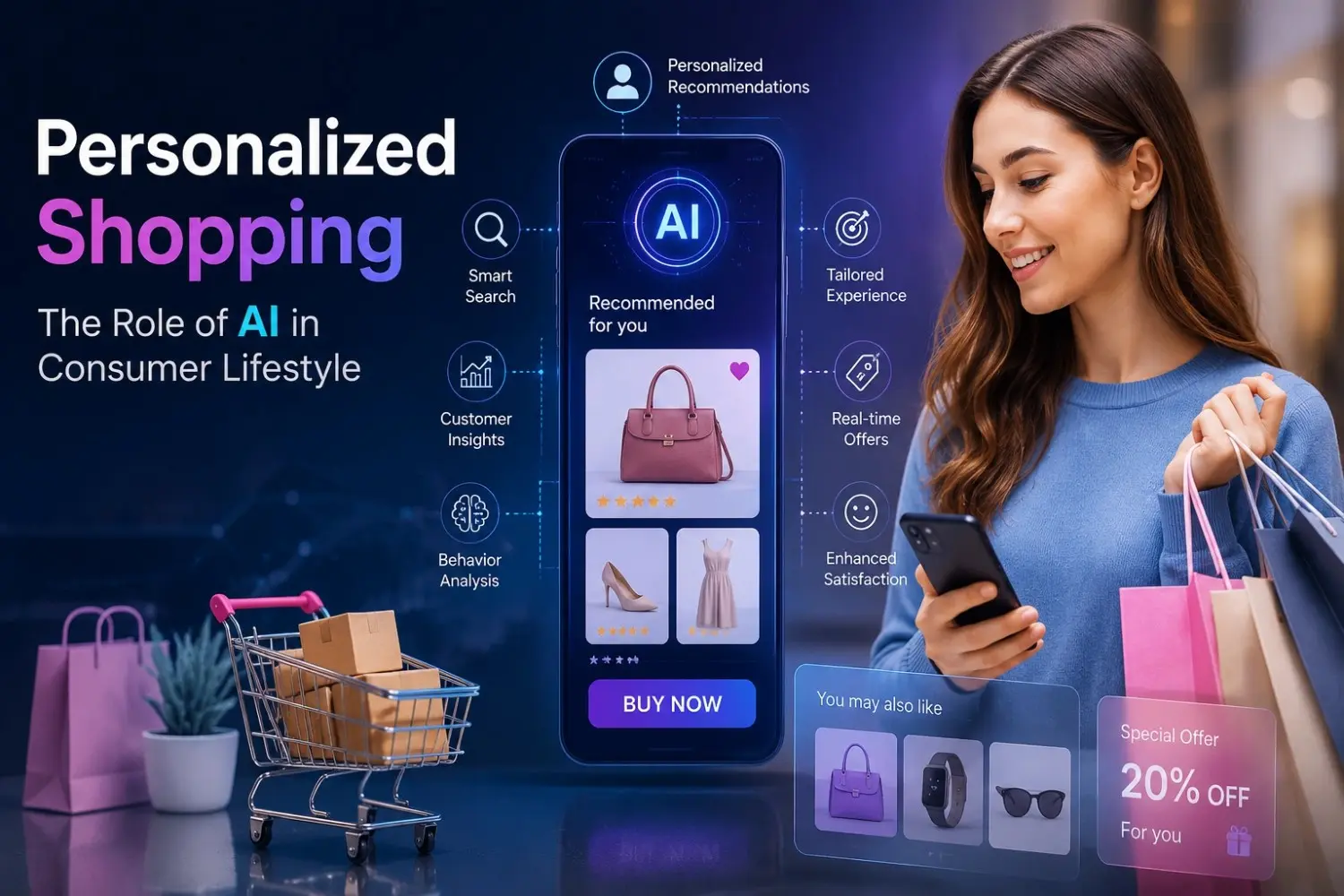

Shopping habits have changed significantly in recent years. Consumers no longer want generic recommendations, endless product lists, or irrelevant advertisements. Instead, they expect experiences that feel tailored to their preferences, interests, and needs.
This shift has made personalized shopping one of the most important technology-driven trends in modern consumer lifestyles. Artificial intelligence is now playing a central role in how people discover products, compare options, make purchasing decisions, and interact with brands.
From online retail platforms to mobile shopping applications, AI is transforming the consumer experience globally. For businesses in the technology and software sectors, understanding this evolution is becoming increasingly important as personalization continues to shape customer expectations and digital engagement.
What Is Personalized Shopping?
Personalized shopping refers to the use of consumer data, behavioral insights, and intelligent technologies to create customized shopping experiences for individual users.
Instead of showing the same products to everyone, AI-powered systems analyze factors such as:
Browsing history
Purchase behavior
Search activity
Product preferences
Geographic location
Shopping patterns
Using this information, businesses can provide recommendations and experiences that feel more relevant to each consumer.
According to research from McKinsey, personalization can reduce customer acquisition costs by up to 50%, increase revenues by 5% to 15%, and improve marketing ROI by 10% to 30%.
Why Consumers Are Demanding More Personalized Experiences
Modern consumers are exposed to thousands of digital messages every day. As a result, people increasingly ignore content that feels generic or irrelevant.
A recent global study found that 81% of consumers ignore marketing messages that are not relevant to them, while 96% are more likely to purchase from brands that personalize communication.
Consumer expectations are evolving rapidly because technology has made personalization more accessible. According to Salesforce research:
73% of customers expect better personalization as technology advances.
65% expect companies to adapt to their changing needs and preferences.
80% consider customer experience to be as important as products and services.
These figures highlight a major shift in consumer lifestyle behavior where convenience, relevance, and personalized experiences influence purchasing decisions more than ever before.
How AI Is Transforming the Shopping Experience
AI-Powered Product Recommendations
One of the most visible applications of AI is intelligent product recommendation systems.
These systems analyze customer behavior in real time and suggest products that align with individual interests.
Consumers benefit from:
Faster product discovery
More relevant suggestions
Reduced decision fatigue
Improved shopping convenience
For businesses, recommendation engines increase engagement and encourage repeat purchases.
Smarter Search Experiences
Traditional search systems depend heavily on keywords. AI-powered search tools are more advanced because they understand user intent.
Many consumers now use conversational AI tools to research products, compare options, and receive personalized suggestions before making purchases.
Research shows that 58% of consumers have replaced traditional search engines with generative AI tools for product and service recommendations. This number has increased significantly from previous years.
Virtual Shopping Assistants
AI-powered assistants are becoming increasingly common across retail and ecommerce platforms.
These assistants help consumers:
Find products faster
Answer questions instantly
Compare options
Receive personalized recommendations
Research indicates that 71% of consumers want generative AI integrated into shopping experiences.
This demonstrates growing consumer confidence in AI-assisted shopping journeys.
The Impact on Consumer Lifestyle
Saving Time and Improving Convenience
Modern lifestyles are increasingly busy. Consumers expect technology to simplify daily activities rather than add complexity.
AI personalization helps reduce the time spent searching for products by delivering relevant recommendations immediately.
This convenience has become one of the strongest reasons consumers embrace AI-powered shopping experiences.
According to BCG research, four-fifths of consumers worldwide are comfortable with personalized experiences and expect companies to provide them.
Reducing Decision Overload
Too many choices can create mental fatigue.
AI helps consumers narrow options based on personal preferences, making decision-making easier and more efficient.
This aligns with broader lifestyle trends focused on improving productivity, reducing digital stress, and creating smoother online experiences.
What This Means for Technology and Software Businesses
The rise of personalized shopping is not just a retail trend. It reflects a larger shift toward intelligent digital experiences across industries.
Software companies and technology providers are increasingly developing:
Recommendation engines
Customer analytics platforms
AI-powered customer support systems
Behavioral data platforms
Predictive shopping technologies
Businesses that successfully implement personalization often experience stronger customer engagement and improved long-term loyalty.
McKinsey research found that companies with stronger personalization strategies generate 40% more revenue from personalization compared to slower-growing competitors.
The Privacy Challenge
While consumers appreciate personalized experiences, they also care about privacy.
Salesforce research shows that:
79% of customers are becoming more protective of personal data.
71% are more likely to trust companies that clearly explain how their data is used.
For technology companies, this creates a balance between personalization and transparency.
The future of AI-driven shopping will depend on maintaining consumer trust while delivering customized experiences.
The Future of AI in Consumer Lifestyle
Personalized shopping is moving beyond simple product recommendations.
Emerging technologies are introducing:
AI shopping assistants
Virtual try-on experiences
Predictive purchasing systems
Hyper-personalized product discovery
Intelligent customer support
As AI becomes more advanced, consumers will increasingly expect digital experiences that understand their preferences while respecting their privacy.
Businesses that combine personalization, transparency, and technological innovation will be better positioned to compete in both the United States and global markets.
Conclusion
AI-powered personalization is reshaping consumer lifestyles by making shopping more convenient, relevant, and efficient. Modern consumers increasingly expect digital experiences that understand their needs and simplify decision-making.
For software companies, technology businesses, and IT professionals, personalized shopping represents more than a retail trend. It highlights how artificial intelligence is changing the relationship between businesses and consumers across every digital touchpoint.
As expectations continue to evolve, the companies that use AI responsibly while delivering meaningful customer experiences will shape the future of consumer engagement.