SCHEDULE A CALL

In today's competitive business environment, attracting new customers is only part of the challenge. Retaining existing customers has become equally important, if not more valuable, for long-term business success.
As customer expectations continue to evolve, businesses across the United States and global markets are investing in modern Customer Relationship Management (CRM) technologies to build stronger relationships, improve customer experiences, and increase loyalty.
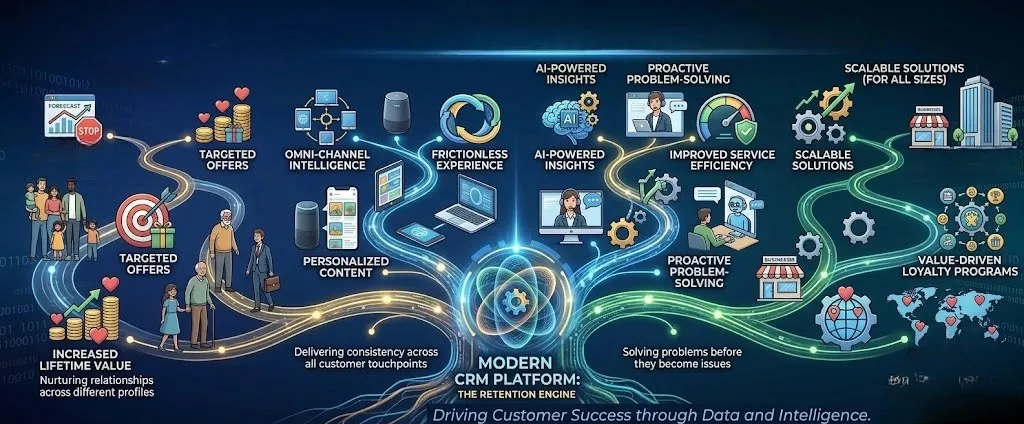
Modern CRM platforms have moved far beyond simple contact management systems. Powered by artificial intelligence, automation, data analytics, and cloud technologies, today's CRM solutions help businesses understand customer behavior, personalize interactions, and deliver consistent experiences across multiple channels.
For software companies, technology providers, startups, and enterprises, CRM technology is becoming a critical component of sustainable growth and customer retention strategies.
Why Customer Retention Matters More Than Ever
Many businesses focus heavily on customer acquisition, but research consistently shows that retaining existing customers is often more cost-effective than acquiring new ones.
According to research from Bain & Company, increasing customer retention rates by just 5% can increase profits by 25% to 95%.
Customer retention benefits include:
Lower marketing costs
Higher customer lifetime value
Increased brand loyalty
More referrals and repeat purchases
Better long-term revenue stability
As competition increases across industries, businesses are turning to technology to strengthen customer relationships and improve retention outcomes.
What Makes Modern CRM Technology Different?
Traditional CRM systems primarily stored customer information. Modern CRM platforms provide businesses with real-time insights and intelligent tools that support decision-making and customer engagement.
Today's CRM technologies combine:
Artificial intelligence
Predictive analytics
Marketing automation
Customer behavior tracking
Cloud-based accessibility
Omnichannel communication
These capabilities allow businesses to move from reactive customer service to proactive customer relationship management.
How AI-Powered CRM Systems Improve Customer Retention
Personalized Customer Experiences
One of the biggest advantages of modern CRM technology is personalization.
Customers increasingly expect businesses to understand their needs and preferences.
According to Salesforce research:
73% of customers expect companies to understand their unique needs and expectations.
88% say the experience a company provides is as important as its products or services.
AI-powered CRM systems analyze customer behavior, purchase history, and engagement patterns to deliver personalized experiences at scale.
Businesses can:
Recommend relevant products
Send targeted communications
Provide customized support
Anticipate customer needs
Personalization helps customers feel valued, which strengthens loyalty over time.
Predictive Customer Insights
Modern CRM systems use predictive analytics to identify patterns that may indicate customer dissatisfaction or churn risk.
Instead of waiting for customers to leave, businesses can take proactive steps to retain them.
Examples include:
Identifying declining engagement levels
Detecting reduced purchase frequency
Recognizing support issues early
Recommending retention campaigns
Predictive insights help businesses make informed decisions before customer relationships weaken.
Automation Improves Customer Engagement
Faster Response Times
Consumers expect quick responses when interacting with businesses.
According to HubSpot research:
90% of customers rate an immediate response as important when they have a customer service question.
CRM automation helps businesses respond faster through:
Automated workflows
Smart ticket routing
AI-powered chatbots
Automated follow-ups
Faster responses improve customer satisfaction and reduce frustration.
Consistent Communication Across Channels
Modern customers interact with businesses through multiple touchpoints, including:
Email
Websites
Mobile applications
Social media
Live chat
Customer portals
CRM platforms centralize these interactions, ensuring communication remains consistent regardless of channel.
This creates a seamless customer experience that strengthens trust and engagement.
Cloud-Based CRM Technologies Support Business Growth
Accessibility and Scalability
Cloud-based CRM systems allow teams to access customer information from virtually anywhere.
This flexibility is especially important for:
Remote teams
Global organizations
Hybrid work environments
Fast-growing businesses
Cloud CRM solutions help organizations scale operations without significantly increasing infrastructure costs.
Better Collaboration Between Teams
Customer retention is not solely the responsibility of sales or support teams.
Successful retention strategies often involve:
Sales departments
Marketing teams
Customer success managers
Product teams
Technical support specialists
Modern CRM systems create a centralized source of customer information, helping departments work together more effectively.
Data-Driven Decision Making and Retention
Businesses that leverage customer data effectively gain a significant competitive advantage.
According to McKinsey research, organizations that use customer behavior data effectively can generate revenue growth of 5% to 15% while improving marketing efficiency by 10% to 30%.
Modern CRM platforms provide insights into:
Customer preferences
Engagement trends
Purchase behavior
Retention metrics
Service performance
These insights help businesses continuously improve customer experiences.
CRM Technology and the Future of Customer Retention
As artificial intelligence continues to evolve, CRM technologies are becoming increasingly intelligent.
Emerging innovations include:
AI-generated customer insights
Predictive customer journey mapping
Advanced personalization engines
Conversational AI support systems
Automated customer success recommendations
These technologies allow businesses to create stronger relationships while improving operational efficiency.
For software companies and technology-driven organizations, CRM innovation will continue to play a central role in customer retention strategies.
Why This Matters for the US and Global Markets
Customers in the United States and international markets expect personalized, responsive, and consistent experiences.
Businesses that fail to meet these expectations risk losing customers to competitors that leverage technology more effectively.
Modern CRM technologies help organizations:
Build trust
Improve engagement
Increase customer satisfaction
Strengthen loyalty
Support sustainable growth
As customer expectations continue to rise, CRM systems are becoming essential tools for businesses seeking long-term success.
Conclusion
Customer retention has become one of the most important drivers of sustainable business growth. Modern CRM technologies are helping businesses strengthen customer relationships through personalization, automation, predictive insights, and data-driven decision-making.
For software companies, IT organizations, startups, and enterprises targeting both US and global markets, CRM technology is no longer simply a sales tool. It has become a strategic asset that supports customer loyalty, operational efficiency, and long-term business performance.
Organizations that embrace modern CRM innovations today will be better positioned to retain customers, build stronger relationships, and compete successfully in an increasingly digital economy.