SCHEDULE A CALL

Enterprise software has always been designed to help people work better. From project management and customer relationship systems to communication platforms and business analytics, these tools have become part of everyday professional life.
Now, generative AI is changing what people expect from enterprise software.
Instead of simply giving employees another dashboard, menu, or form to work with, modern software can increasingly understand natural language, generate content, summarize information, analyze data, and assist with complex tasks.
This shift is changing more than business technology. It is also changing the daily lifestyle of professionals who use these systems. Employees can spend less time searching through information and more time solving problems, making decisions, and focusing on meaningful work.
For software companies, IT professionals, business leaders, and technology-focused organizations, understanding this transition is becoming increasingly important.
What Is Generative AI Bringing to Enterprise Software?
Traditional enterprise software usually requires users to learn specific workflows. Employees need to know where to click, which fields to complete, and where to find information.
Generative AI introduces a different approach.
Users can increasingly interact with software using everyday language. Instead of navigating through several screens to find information, an employee might simply ask a system to summarize customer activity, prepare a report, explain a business trend, or identify an unusual pattern.
This makes software feel less like a tool that people have to operate and more like an intelligent assistant that works alongside them.
McKinsey's research shows how quickly this shift is happening. In its global survey, 88% of respondents reported that their organizations regularly use AI in at least one business function. However, only 7% said AI had been fully scaled across their organizations, showing that widespread adoption does not necessarily mean companies have completely transformed their workflows.
How AI Is Changing the Daily Work Experience
Less Time on Repetitive Tasks
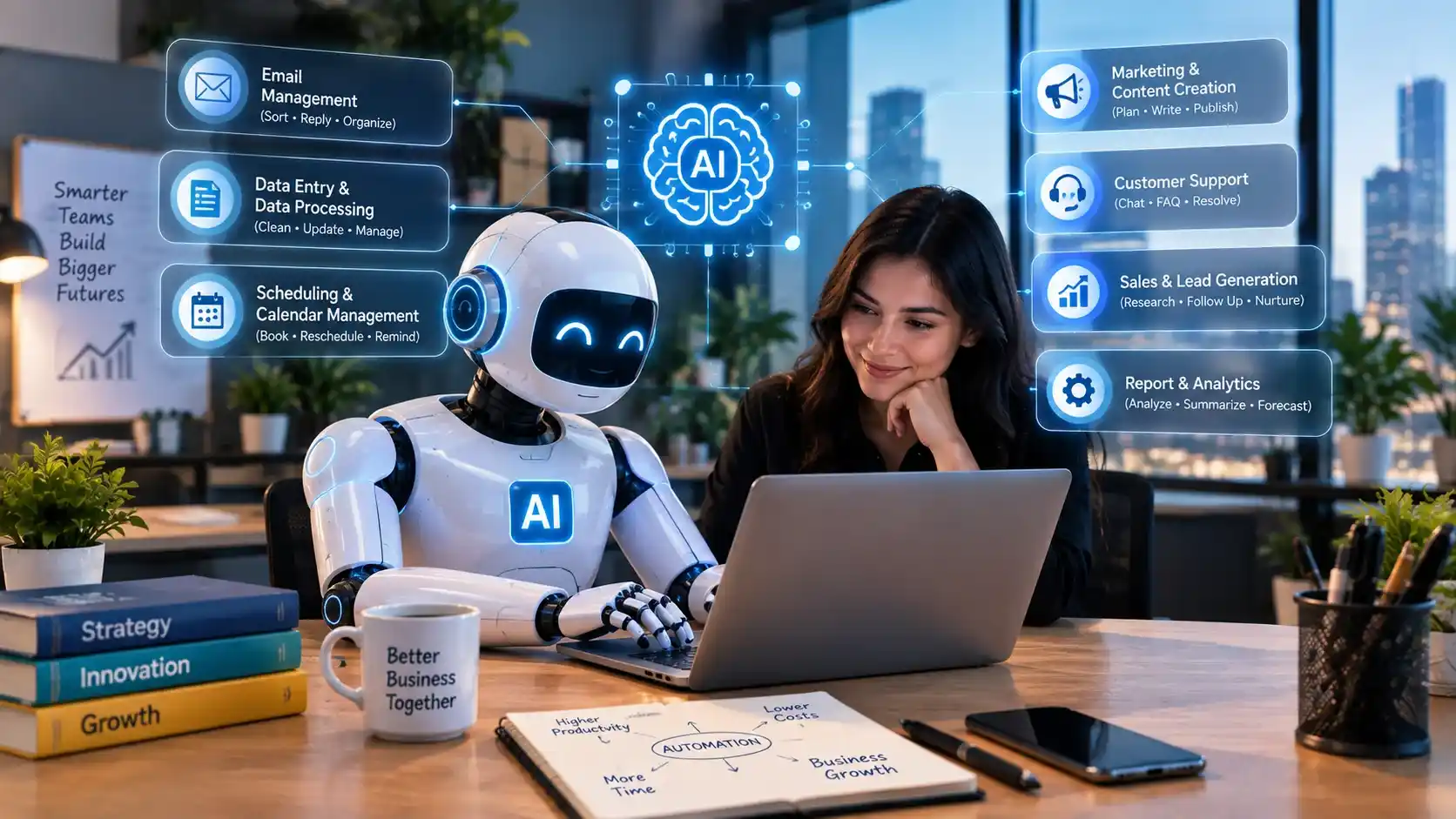
One of the biggest lifestyle changes created by AI-powered enterprise software is the reduction of repetitive work.
Employees often spend large amounts of time preparing reports, organizing information, writing routine documents, searching databases, and handling administrative processes.
Generative AI can assist with many of these activities.
For example, an employee could ask an AI system to:
Summarize a long business report
Draft a customer response
Organize meeting notes
Identify important information in documents
Create an initial project update
Analyze large amounts of text
The human employee still reviews and makes decisions, but the amount of manual effort can be significantly reduced.
This can create more space for focused and meaningful work.
AI Is Changing How Professionals Use Software
From Menus to Conversations
One of the most noticeable changes is the move toward conversational software.
Instead of learning every feature of a complicated enterprise platform, users can communicate with software using natural language.
This matters because enterprise systems can be difficult to learn, particularly for new employees.
AI can make these systems more accessible by allowing users to ask questions instead of searching through multiple menus.
The result is a more natural relationship between people and technology.
From Information Overload to Intelligent Summaries
Modern professionals deal with an enormous amount of digital information.
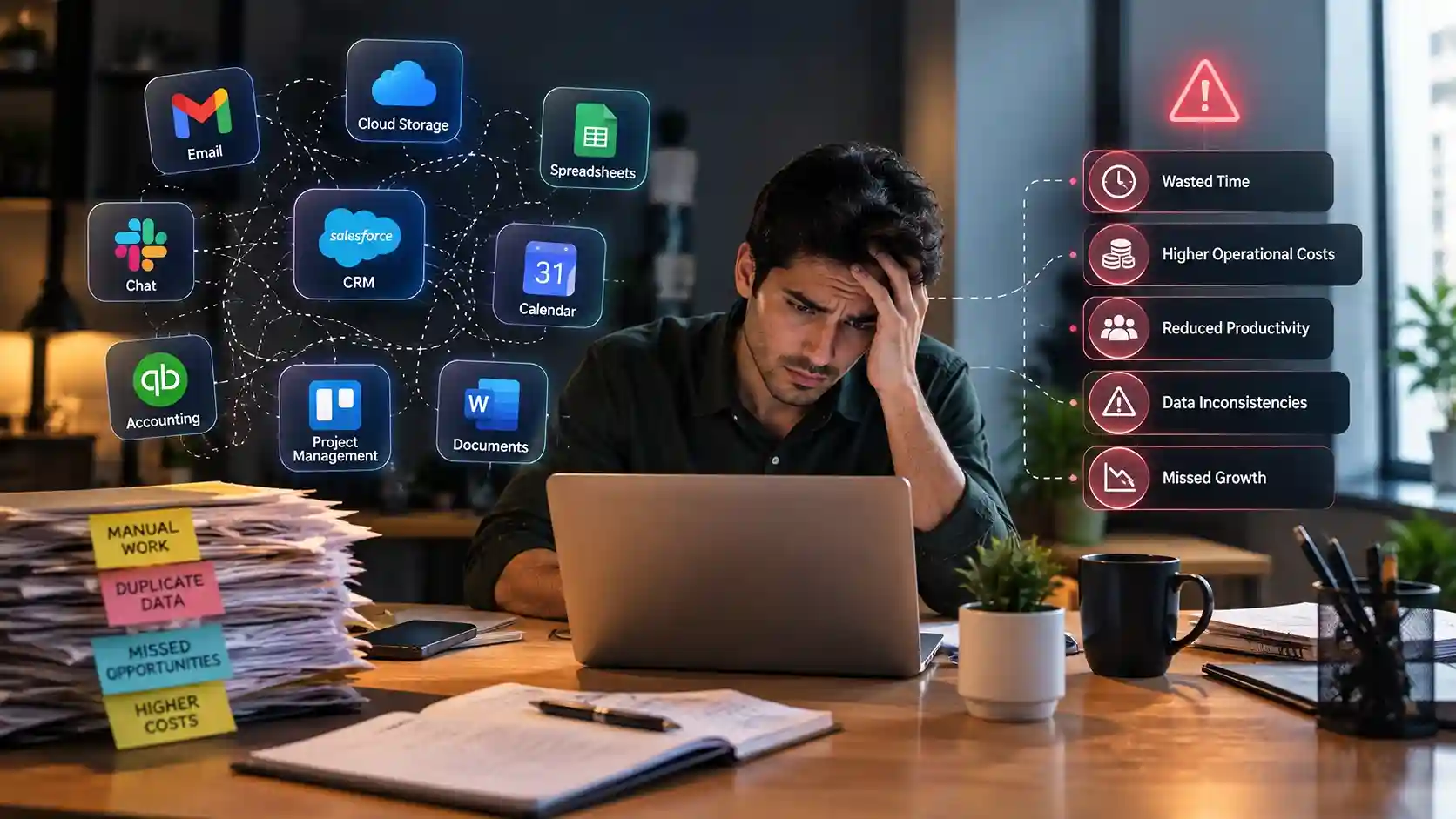
Emails, documents, customer records, project updates, notifications, dashboards, and internal communications can quickly become overwhelming.
AI can help organize this information into concise summaries and highlight what deserves attention.
For professionals working in technology-driven environments, this can help reduce unnecessary mental switching and protect time for deeper work.
What This Means for Software Development Teams
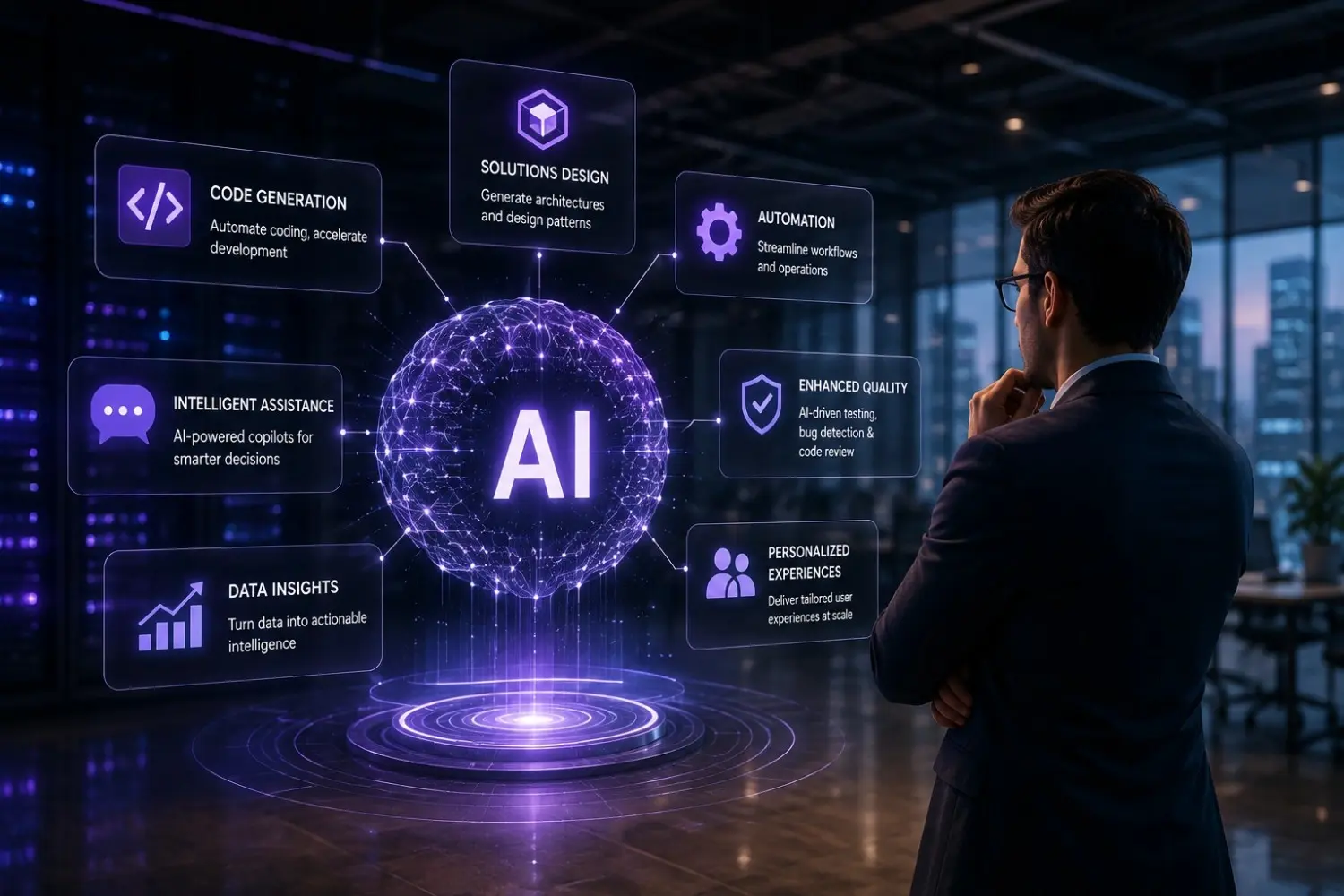
Generative AI is also changing the lifestyle and workflow of people who build software.
Developers can use AI-assisted tools for tasks such as:
Generating code suggestions
Explaining unfamiliar code
Creating test cases
Finding potential bugs
Writing documentation
Converting code between languages
Supporting technical research
This does not mean that software developers become unnecessary.
Instead, the role can move toward higher-value activities such as architecture, problem-solving, system design, security, and understanding business requirements.
McKinsey research has identified software engineering as one of the business functions where organizations are actively applying generative AI, alongside marketing and sales, product and service development, and service operations.
The Productivity Question
A major question surrounding generative AI is whether it actually makes people more productive.
The answer depends heavily on how organizations implement it.
AI can save time, but simply adding an AI tool to an existing workflow does not automatically create meaningful productivity gains.
Companies need to rethink how work is performed.
McKinsey's research found that organizations taking an enterprise-wide approach to generative AI deployment had a 35% success rate for at least one successful deployment, compared with 24% among organizations pursuing the technology within a single business unit or region.
This suggests that successful AI adoption is not only a technology decision. It is also an organizational and workflow decision.
How AI Can Support Focus and Work Dedication
Moving Away From Constant Task Switching
Technology has made communication easier, but it has also created a culture of constant notifications and interruptions.
Generative AI can potentially reduce some of this pressure by handling routine information processing.
Instead of manually checking dozens of updates, employees may be able to receive a prioritized summary.
Instead of spending an hour creating a first draft, they can start with an AI-generated version and dedicate their time to reviewing and improving it.
This creates an important shift:
Less time managing information, more time thinking about what to do with it.
Supporting Deeper Work
Software professionals often need uninterrupted time for complex problem-solving.
When AI handles repetitive tasks, employees can spend more time on activities that require human judgment, creativity, and strategic thinking.
The goal should not be to make people work continuously.
The goal should be to help people spend more of their working time on tasks that actually require their attention.
The Business Side of the AI Transformation
Generative AI is not only changing employee workflows. It is also influencing how businesses design and manage enterprise software.
IBM's global CEO study found that 61% of surveyed CEOs said their organizations were actively adopting AI agents and preparing to implement them at scale. At the same time, only 25% of surveyed CEOs said their AI initiatives had delivered the expected ROI, and only 16% had scaled those initiatives across the enterprise.
These figures highlight an important reality.
AI adoption is accelerating, but successful implementation is still difficult.
Businesses need to consider:
Data quality
Security
Employee training
AI governance
Integration with existing systems
Measurable business outcomes
Simply purchasing an AI tool is not enough.
Privacy and Trust Cannot Be Ignored
As enterprise software becomes more intelligent, it also becomes more dependent on business data.
This creates important questions around privacy and security.
Businesses need to understand:
What information is being processed?
Where is company data stored?
Who can access AI-generated information?
How are sensitive customer details protected?
How should employees use AI responsibly?
Trust will become increasingly important as AI becomes integrated into everyday professional workflows.
The companies that benefit most from generative AI will likely be those that combine innovation with responsible data management.
Will Generative AI Replace Enterprise Software?
Probably not in the simple way many people imagine.
Instead, generative AI is more likely to become a new layer inside enterprise software.
CRM platforms, HR systems, financial applications, project management platforms, development environments, and analytics tools can all become more intelligent through AI.
The software itself remains important, but the way people interact with it changes.
Instead of asking employees to learn every function, AI can help bring relevant capabilities to the user when they need them.
This could make enterprise software more personalized, conversational, and adaptable.
The Future of the Tech Lifestyle
The influence of generative AI extends beyond offices and business processes.
For technology professionals, it is changing how people learn, communicate, solve problems, and manage their working day.
The future workplace may involve fewer repetitive tasks, more AI-assisted decision-making, and greater emphasis on skills that machines struggle to replicate.
These include:
Critical thinking
Creativity
Leadership
Communication
Strategic reasoning
Problem-solving
Emotional intelligence
Technology may become more powerful, but human judgment will remain central.
Conclusion
Generative AI is reshaping enterprise software by changing how people interact with technology and how businesses organize work.
The biggest transformation may not be the ability to generate text or code. It may be the shift toward software that understands context, assists users, reduces repetitive work, and helps professionals focus on higher-value activities.
For software companies and IT professionals across the United States and global markets, this represents a major change in the way digital products are designed and experienced.
The future of enterprise software is unlikely to be simply about adding more features. It will be about creating technology that understands people better, simplifies their work, and gives them more time to focus on what matters.