SCHEDULE A CALL
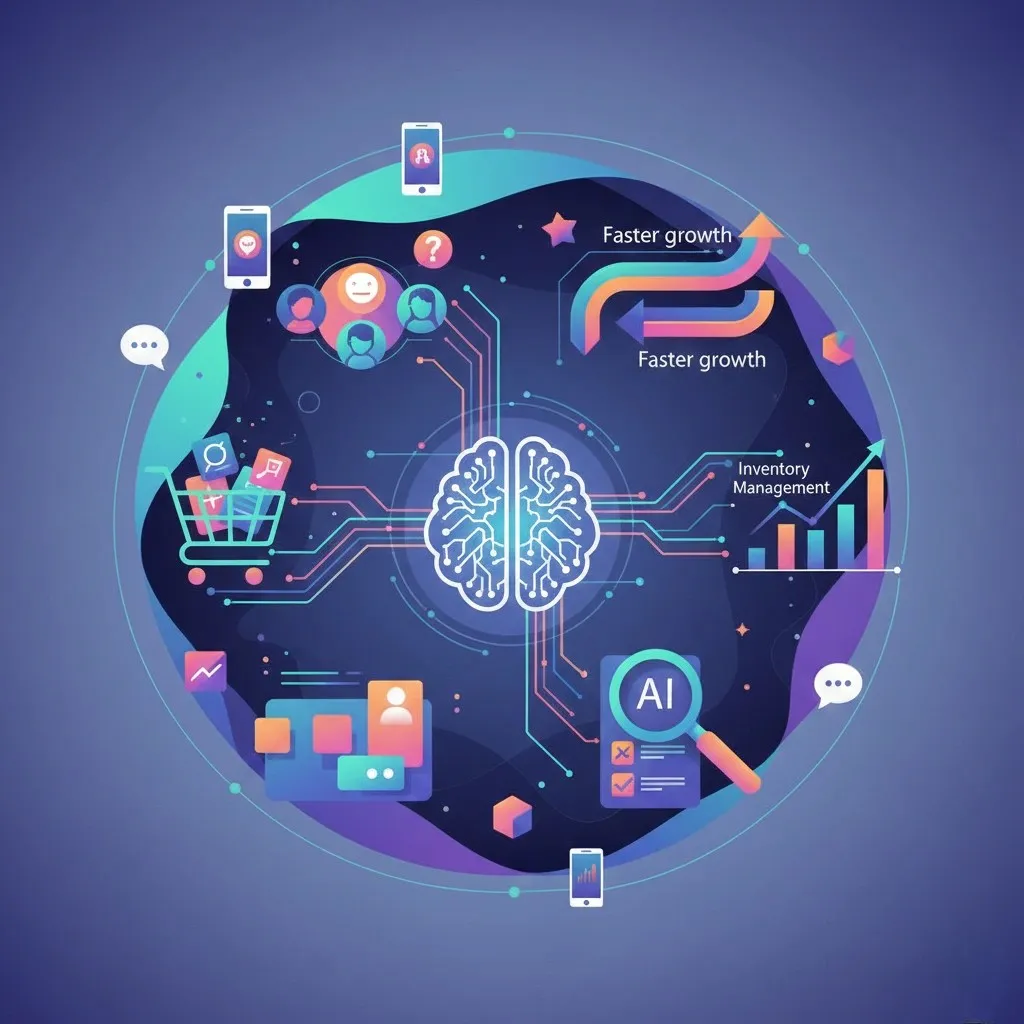

Artificial Intelligence is no longer a futuristic concept. It has become a practical engine driving change in eCommerce. Business leaders, developers, entrepreneurs, and IT professionals around the world are asking:
How is AI turning ordinary online stores into smart eco-systems?
Today, successful online stores are not just digital catalogs. They are intelligent systems that personalize experiences, understand customer behavior, automate decisions, and adapt on the fly. This article will explore how AI is transforming online commerce while supporting business growth, improving productivity, and reshaping operational focus.
This topic is especially important for software companies, IT teams, developers, and digital strategists targeting markets like the United States and global business communities.
The Growing Role of AI in E-Commerce
AI is no longer just a support technology in eCommerce. It has become a core element for customer engagement and operational efficiency.
According to research from McKinsey, companies that adopt AI solutions increase profitability by up to 20 percent more than those that do not. In the retail and E-Commerce sector specifically, businesses using AI for personalization report a 30 percent or higher increase in conversion rates compared to traditional approaches.
These numbers show that AI is not just a trend, but a measurable advantage for online stores seeking sustainable growth.
What Makes an Online Store a Smart Ecosystem?
A smart ecosystem is more than a website that sells products. It is a system that:
Understands shopper behavior in real time
Predicts customer needs
Automates personalized recommendations
Detects fraud and risk
Improves supply chain operations
Enhances customer support through AI assistance
In this way, the online store becomes a living system that adjusts itself based on data and patterns, instead of relying solely on manual rules.
AI-Powered Personalization and Customer Experience
One of the most impactful areas of AI in E-Commerce is personalization.
Personalization at Scale
Online platforms can now collect and analyze millions of user interactions. AI uses this data to:
Recommend products based on purchase history
Predict future buying behavior
Customize messaging and promotions
Curate shopping experiences to individual preferences
Forrester reports that 59 percent of online shoppers say personalization influences their purchase decisions strongly.
This suggests that AI-driven personalization is not just useful. It is expected by modern consumers.
Customer Experience That Feels Human
AI chatbots and virtual assistants provide immediate support for common inquiries. These systems free human agents to focus on complicated or high-value issues.
AI can handle:
Order tracking
Returns and exchange queries
Product guidance
Real-time support even outside business hours
This improves overall customer happiness and operational efficiency.
Improving Marketing and Sales with Intelligent Insights
Smarter Audience Targeting
AI analyzes massive amounts of behavioral data to identify patterns and segments. Marketing teams can use these insights to:
Create targeted campaigns
Optimize advertising spending
Reduce customer acquisition costs
Improve ROI on digital ads
According to a survey from Salesforce, over 72 percent of marketers say AI helps them communicate more effectively with customers.
AI also enables predictive analytics that forecasts high-value customers before they convert.
Dynamic Pricing and Inventory Optimization
AI can analyze supply and demand trends to adjust prices in real time. This is especially useful in competitive markets where even small pricing shifts can influence buying decisions.
Smart inventory systems help online stores avoid stockouts, reduce carrying costs, and align supply with demand based on predictive insights.
How AI Supports Operational Focus and Team Productivity
Reducing Manual Workload
AI systems automate time-consuming processes such as tagging products, sorting customer requests, scheduling campaigns, and monitoring site performance. This allows teams to redirect their mental focus toward innovation and strategy.
Enhancing Developer Productivity
In IT and software teams, AI-powered development tools help with code suggestions, automated testing, and quality checks. This speeds up delivery cycles and reduces the risk of bugs, creating higher software quality in less time.
This evolution means developers spend less time on repetitive work and more time solving hard problems that require human creativity and critical thinking.
Security and Fraud Detection in Smart Ecosystems
Fraud is one of the biggest challenges for online stores. AI systems use pattern recognition to detect anomalies such as:
Unusual transaction patterns
High-risk account activity
Fake registrations
Suspicious payment behavior
These systems learn over time, reducing false positives and improving protection without slowing down genuine transactions.
Common Questions Businesses Have About AI in Commerce
Will AI Replace Human Jobs?
AI does automate many repetitive tasks, but it also creates new roles in data interpretation, strategy, ethical AI governance, and customer engagement. Human judgment, creativity, and empathy remain essential.
Is AI Only for Big Enterprises?
No. Cloud-based AI tools and services make intelligent commerce accessible to businesses of all sizes. Small and medium enterprises can benefit from scalable AI solutions with lower upfront costs.
The Future of Online Commerce Is Intelligent and Connected
Smart ecosystems are not just digital stores. They are platforms that:
Learn from behavior
Adapt to context
Predict customer needs
Optimize processes
Deliver personal experiences
In this era of intelligent systems, businesses that adopt AI thoughtfully will outperform competitors, deliver better customer experiences, and build teams that stay focused and dedicated.
Conclusion
AI is transforming online stores from static shopping portals into connected, smart ecosystems that operate with efficiency, insight, and personalization. For software developers, IT leaders, business strategists, and digital professionals, understanding this shift is essential. Whether you are targeting the US market or global audiences, smart AI adoption supports stronger focus, better productivity, and sustainable growth.
AI is not just enhancing E-Commerce. AI is redefining it.


.webp)