SCHEDULE A CALL
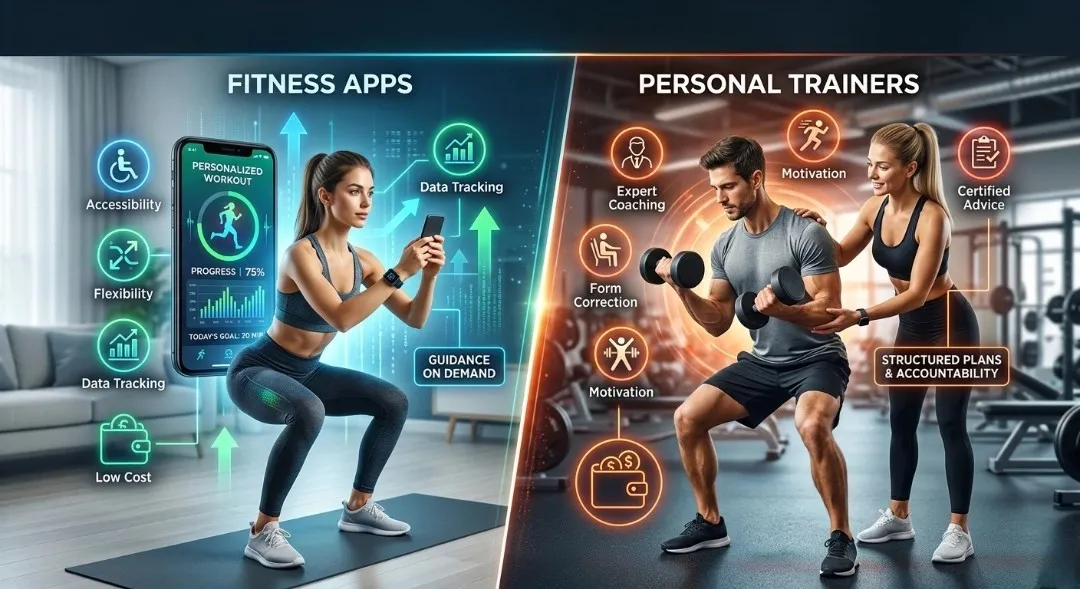

Fitness is no longer limited to gyms, fixed schedules, or one-on-one coaching sessions. Technology has completely changed the way people approach health, exercise, and wellness. Across the United States and global markets, one of the most searched lifestyle and fitness questions today is:
“Are fitness apps better than personal trainers?”
For professionals working in software, IT, and digital industries, this question has become even more relevant. Long work hours, remote jobs, screen-heavy routines, and demanding schedules make flexibility and convenience more important than ever.
Modern fitness solutions now include AI-powered workout apps, wearable integrations, virtual coaching platforms, and data-driven wellness tracking. At the same time, personal trainers continue to offer accountability, customization, and human motivation that technology alone often cannot fully replace.
This article explores what works better today based on lifestyle, productivity, work dedication, technology trends, and real user behavior.
The Rise of Technology-Driven Fitness
Fitness technology has grown rapidly in recent years. Mobile apps, smartwatches, AI coaching systems, and wearable devices now shape how millions of people manage their health routines.
Research shows that the global fitness app market was valued at approximately $12.12 billion and is projected to reach $33.58 billion by 2033, with a growth rate of 13.40% CAGR. North America currently represents the largest share of the market.
Another industry report estimates that fitness apps reached nearly 1.1 billion users worldwide, highlighting how digital fitness has become part of mainstream lifestyle habits.
For professionals in the IT and software industry, this shift makes sense. Technology-driven fitness solutions fit naturally into digitally connected lifestyles.
Why Fitness Apps Have Become So Popular
1. Flexibility for Busy Professionals
Tech professionals often work unpredictable hours. Fitness apps allow users to exercise:
At home
During work breaks
While traveling
Without fixed schedules
This flexibility supports professionals who struggle to maintain consistent gym routines.
2. AI-Powered Personalization
Modern fitness apps are no longer simple step counters. Many now use AI to personalize workouts based on:
User goals
Recovery data
Sleep patterns
Workout history
Apps integrated with wearables provide real-time recommendations, making workouts feel more adaptive and efficient.
Industry reports show that wearable device integration and AI-driven coaching are major drivers behind fitness app growth globally.
3. Cost Efficiency
Compared to hiring a personal trainer in the USA, fitness apps are often significantly more affordable. Many apps operate on subscription models that cost less than a single in-person training session.
This affordability makes digital fitness attractive for younger professionals and remote workers.
Where Personal Trainers Still Have the Advantage
Human Accountability and Motivation
One major reason people continue hiring trainers is accountability. Human trainers:
Correct form in real time
Push clients through difficult sessions
Provide emotional encouragement
Adapt workouts instantly
Technology can provide reminders, but human interaction often creates stronger commitment.
Customized Guidance Beyond Algorithms
AI systems rely heavily on available data, but personal trainers observe:
Body movement quality
Energy levels
Motivation changes
Emotional stress
This human understanding becomes especially important for injury prevention and long-term fitness consistency.
Fitness and Mental Focus in the IT Industry
The connection between physical fitness and mental performance has become increasingly important in the tech world. Developers, engineers, designers, and startup founders spend long hours in cognitively demanding environments.
Regular exercise supports:
Better concentration
Reduced mental fatigue
Improved productivity
Higher stress resilience
For many professionals, fitness is no longer just about appearance. It directly supports work dedication and mental clarity.
How Technology Is Redefining the Fitness Lifestyle
Wearables and Data Tracking
Smartwatches and fitness bands now track:
Heart rate
Sleep quality
Recovery levels
Stress indicators
Daily movement patterns
The U.S. fitness app market reports that wearable-device integration is among the fastest-growing segments in digital fitness.
Virtual Communities and Social Motivation
Fitness apps increasingly include social engagement features such as:
Community challenges
Workout sharing
Group competitions
Virtual coaching groups
Platforms like Strava have experienced massive growth, surpassing 150 million registered users globally.
This social element improves consistency and motivation, especially for remote workers and globally distributed teams.
Privacy Concerns Around Fitness Technology
As AI-driven fitness platforms grow, users are becoming more aware of data privacy concerns.
Recent research found that some popular fitness apps collect large amounts of personal and behavioral data linked to identity and activity tracking.
This raises important questions about:
Health data privacy
AI training models
User consent
Digital wellness ethics
For technology professionals, these concerns are becoming part of broader conversations around responsible software development.
So, What Works Better Today?
Fitness Apps Work Better For:
Busy professionals
Remote workers
Flexible schedules
Budget-conscious users
Data-driven fitness tracking
Personal Trainers Work Better For:
Beginners needing guidance
People recovering from injuries
Individuals needing accountability
Users preferring human interaction
The Future Is Likely Hybrid
The most realistic future is not fitness apps replacing trainers entirely. Instead, the industry is moving toward hybrid models where:
AI handles tracking and personalization
Trainers provide motivation and expertise
Wearables supply real-time insights
Technology improves accessibility and consistency
This combination aligns well with modern lifestyles, especially in technology-driven industries.
Conclusion
Fitness today is deeply connected with technology, productivity, and lifestyle. For professionals in software and IT industries, maintaining physical health is increasingly viewed as essential for focus, creativity, and sustainable performance.
Fitness apps offer convenience, affordability, and personalization, while personal trainers continue to provide human accountability and adaptive guidance. The best solution often depends on individual goals, work habits, and lifestyle preferences.
As technology continues evolving, fitness is becoming smarter, more connected, and more integrated into the daily lives of professionals around the world.