SCHEDULE A CALL
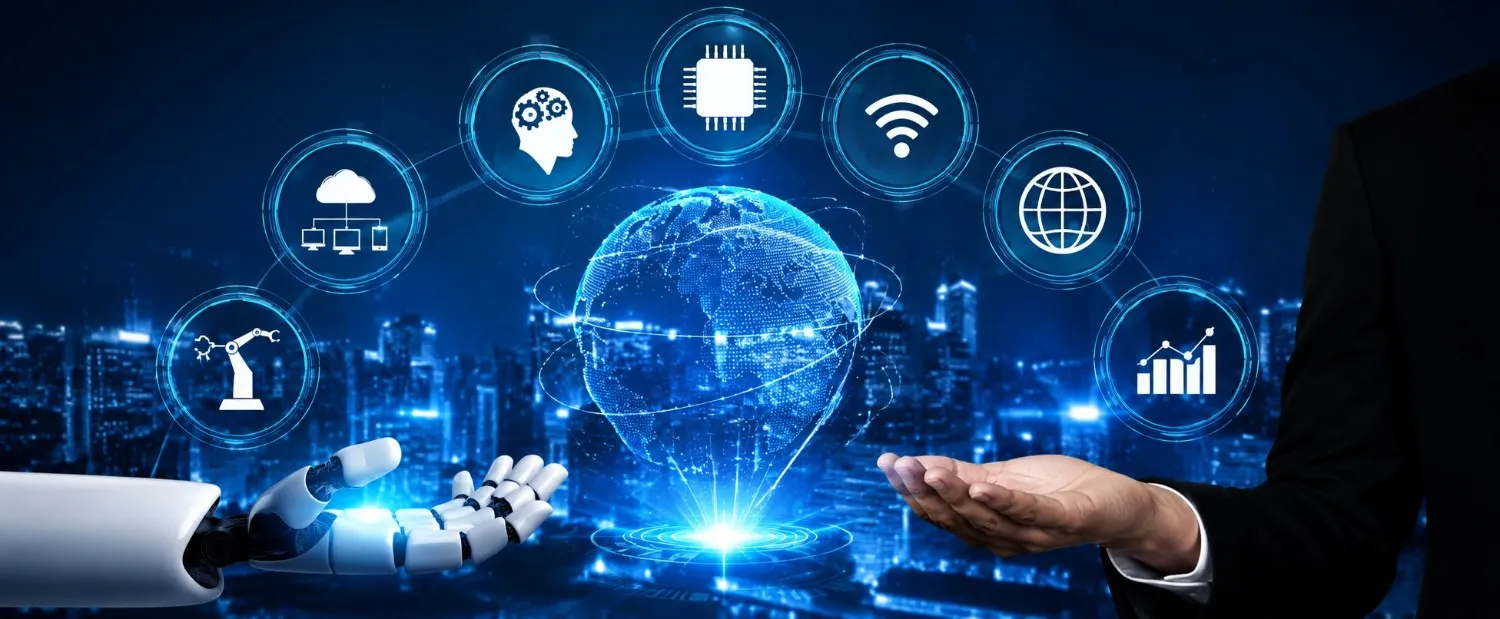

Technology is evolving faster than ever, and businesses across the United States and around the world are paying close attention to the innovations that could define the next decade. From artificial intelligence and cloud computing to advanced cybersecurity and intelligent automation, emerging technologies are no longer experimental concepts. They are becoming essential tools for growth, efficiency, and competitiveness.
Business leaders, startup founders, software companies, and IT professionals are increasingly asking:
Which technologies will have the biggest impact on businesses?
How can organizations prepare for future technological shifts?
Which innovations are worth investing in today?
Understanding these emerging technologies is important because the businesses that adapt early are often better positioned to improve productivity, serve customers more effectively, and maintain long-term growth. This article explores the technologies that are shaping the future of business and why they matter in today's digital economy.
Why Emerging Technologies Matter for Modern Businesses
Technology is no longer just a support function. It has become a core driver of business strategy.
Organizations are using advanced technologies to:
Improve operational efficiency
Enhance customer experiences
Make smarter business decisions
Increase workforce productivity
Strengthen competitive advantage
According to a McKinsey Global Survey, 78% of organizations report using AI in at least one business function, showing how quickly emerging technologies are becoming part of everyday business operations.
Artificial Intelligence and Machine Learning
The Technology Leading Business Transformation
Artificial intelligence continues to be one of the most influential technologies shaping the future of business. AI systems can analyze large amounts of data, automate repetitive tasks, and provide insights that help leaders make informed decisions.
Businesses are applying AI across various functions including:
Customer support
Software development
Marketing automation
Predictive analytics
Business intelligence
According to IBM's Global AI Adoption Index, 42% of large enterprises have actively deployed AI within their operations, while another 40% are exploring or experimenting with AI technologies.
Impact on Productivity and Focus
AI reduces manual work and allows employees to focus on higher-value activities that require creativity, strategy, and problem-solving. This helps teams maintain productivity while reducing repetitive workloads.
Cloud Computing and Cloud-Native Infrastructure
Building Flexible and Scalable Businesses
Cloud computing has transformed how businesses deploy software, manage infrastructure, and support remote teams.
Rather than investing heavily in physical servers, companies can scale resources based on demand.
Benefits include:
Lower infrastructure costs
Greater flexibility
Faster deployment cycles
Improved collaboration
According to Gartner, more than 85% of organizations are expected to embrace a cloud-first principle in their digital initiatives.
Supporting Global Business Operations
Cloud platforms enable software companies and enterprises to serve customers worldwide while maintaining reliable performance and security.
Intelligent Automation
Moving Beyond Traditional Workflows
Automation is becoming increasingly sophisticated through AI-powered systems capable of handling complex processes.
Organizations use intelligent automation to:
Process data faster
Improve operational accuracy
Reduce human error
Streamline business workflows
According to Deloitte, organizations implementing intelligent automation report average productivity improvements of up to 27%.
Enhancing Work Dedication
When routine tasks are automated, employees can dedicate more attention to innovation, customer relationships, and strategic planning.
Cybersecurity Technologies
Security as a Business Priority
As digital transformation accelerates, cybersecurity has become one of the most important business investments.
Cyberattacks continue to increase globally, creating financial and reputational risks for organizations of all sizes.
According to Cybersecurity Ventures, global cybercrime costs are expected to reach $10.5 trillion annually.
Businesses are investing in:
AI-powered threat detection
Zero-trust security frameworks
Advanced endpoint protection
Security monitoring systems
Building Customer Trust
Strong cybersecurity practices not only protect business assets but also help build customer confidence and brand reputation.
Data Analytics and Predictive Intelligence
Turning Data into Strategic Decisions
Modern businesses generate enormous amounts of data every day. Emerging analytics technologies help organizations transform that data into actionable insights.
Business applications include:
Demand forecasting
Customer behavior analysis
Performance measurement
Risk management
According to NewVantage Partners, 91.9% of organizations report measurable business value from investments in data and analytics.
Supporting Smarter Leadership
Leaders increasingly rely on predictive intelligence to anticipate trends and make proactive decisions rather than reacting to challenges after they occur.
Generative AI and Software Development
Transforming How Software Is Built
Generative AI is changing software development by assisting developers with coding, testing, debugging, and documentation.
GitHub research found that developers using AI coding assistants can complete certain coding tasks up to 55% faster compared to traditional methods.
Helping Development Teams Scale
For software companies and IT organizations, generative AI improves efficiency while allowing teams to focus on architecture, innovation, and customer-focused solutions.
Internet of Things and Connected Systems
Creating Smarter Business Environments
The Internet of Things (IoT) connects devices, sensors, and systems to collect and exchange real-time information.
Businesses use IoT technologies for:
Asset tracking
Predictive maintenance
Supply chain monitoring
Smart building management
According to Statista, the number of connected IoT devices worldwide is projected to exceed 29 billion.
Improving Operational Visibility
Real-time data enables organizations to identify inefficiencies, optimize resources, and improve overall performance.
Common Questions Businesses Are Asking
Which Emerging Technology Should Businesses Prioritize?
The answer depends on business goals. However, AI, cloud computing, cybersecurity, and data analytics currently offer some of the highest business impact across industries.
Will Emerging Technologies Replace Human Workers?
Most technologies are designed to augment human capabilities rather than replace them. Businesses benefit most when technology and human expertise work together.
How Can Small Businesses Benefit?
Many emerging technologies are now available through affordable SaaS platforms, making advanced capabilities accessible to businesses of all sizes.
The Future of Business Technology
The future belongs to organizations that can successfully combine technology with human expertise. Businesses that embrace innovation while maintaining focus on customers, employees, and long-term strategy are likely to achieve stronger growth and resilience.
Emerging technologies are not simply changing how businesses operate. They are redefining how value is created, how decisions are made, and how organizations compete in a digital-first world.
Conclusion
Emerging technologies such as artificial intelligence, cloud computing, intelligent automation, cybersecurity, predictive analytics, generative AI, and IoT are shaping the future of business across every industry.
For software companies, IT professionals, and business leaders targeting both the United States and international markets, understanding these innovations is essential for staying competitive. Organizations that adopt the right technologies while maintaining a focus on productivity, customer experience, and sustainable growth will be better positioned for success in the years ahead.
.webp)