SCHEDULE A CALL
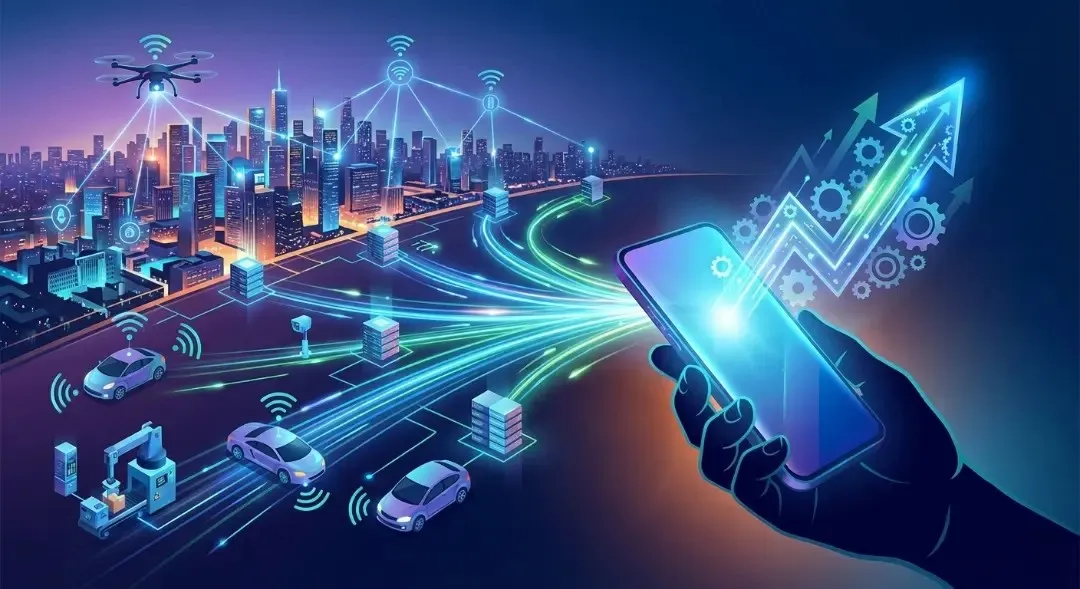

As businesses across the United States continue to adopt connected devices, smart applications, and real-time data systems, two technologies dominate the conversation: Edge Computing and the Internet of Things (IoT). Together, they power everything from smart homes and healthcare monitoring to logistics, manufacturing, and fintech platforms.
However, many businesses face the same challenge when scaling these systems. Traditional mobile apps often struggle with latency, connectivity gaps, data overload, and security concerns. This is where modern mobile app development services play a critical role in overcoming edge computing and IoT limitations.
This article explores how advanced mobile app development approaches are helping businesses unlock the full potential of edge and IoT technologies while maintaining performance, security, and scalability.
Understanding the Edge Computing and IoT Challenge
Why IoT and Edge Systems Face Limitations
IoT devices generate massive amounts of data, often in real time. When all this data is sent directly to centralized cloud servers, it can cause delays, bandwidth issues, and reliability concerns.
Common challenges include:
Network latency impacting real-time decisions
Limited device processing power
Intermittent connectivity
Data security and compliance risks
Scalability across distributed environments
Mobile applications act as the bridge between users, devices, and data. Poorly designed apps amplify these problems instead of solving them.
The Role of Mobile App Development in Edge Computing
Processing Data Closer to the Source
Modern mobile app development services increasingly support edge-based processing. Instead of sending every data point to the cloud, apps can process critical information locally on devices or nearby edge nodes.
This approach:
Reduces latency
Improves responsiveness
Minimizes bandwidth usage
Enables real-time decision making
For US businesses operating in healthcare, logistics, or industrial automation, this speed advantage is a competitive necessity.
Offline Functionality and Smart Syncing
Edge-ready mobile apps are designed to work even when connectivity is limited. Data is processed locally and synced intelligently once a stable connection is available.
This capability is essential for:
Field service applications
Remote monitoring systems
Smart infrastructure platforms
Solving IoT Scalability Through Mobile App Architecture
Modular and Scalable App Design
Scalability is a major concern for IoT ecosystems. Mobile apps built with modular architecture can support thousands or even millions of connected devices without performance degradation.
Key architectural practices include:
API-first development
Microservices integration
Device-agnostic design
These practices allow businesses to scale operations while keeping systems manageable.
Cloud and Edge Integration
Successful mobile app development does not replace the cloud. Instead, it balances cloud and edge processing intelligently. Non-critical data is sent to the cloud for analytics, while time-sensitive operations remain at the edge.
Security and Compliance in Edge-Driven Mobile Apps
Protecting Data Across Distributed Networks
Security becomes more complex when data flows across devices, edge nodes, and cloud systems. Modern mobile app development services embed security into every layer.
This includes:
End-to-end encryption
Secure device authentication
Role-based access control
Compliance with US data protection standards
Security-focused app development is essential for industries handling sensitive data, such as healthcare, finance, and enterprise SaaS.
AI as a Force Multiplier in Mobile App Development
AI is now deeply integrated into modern mobile app development, especially for edge and IoT use cases. It enables predictive insights, anomaly detection, and intelligent automation directly within applications.
Research Insight
AI use in software development has grown significantly over the last few years. According to the Stack Overflow 2025 developer survey 78.5% engineers already use AI tools in the software development process, with almost one in two (47.1%) using them daily. We can confidently say that AI is arguably the broadest “top software development technology” for 2026 and beyond.
AI-powered mobile apps help businesses:
Analyze IoT data in real time
Predict failures before they occur
Optimize system performance
Reduce manual intervention
Improving Business Outcomes With Smarter Mobile Apps
Faster Decisions and Better User Experience
When mobile apps process data closer to the source, users experience faster responses and more reliable performance. This directly impacts customer satisfaction and operational efficiency.
For US-based businesses competing in fast-moving markets, responsiveness often determines success.
Lower Infrastructure Costs
By reducing unnecessary cloud data transfers, edge-enabled mobile apps help businesses control infrastructure expenses. This makes large-scale IoT adoption more financially sustainable.
Use Cases Driving Demand in the US Market
Mobile app development services that address edge and IoT limitations are in high demand across sectors such as:
Smart healthcare and remote patient monitoring
Industrial automation and manufacturing
Logistics and supply chain tracking
Smart retail and personalized commerce
Connected energy and utilities
These industries require reliability, speed, and security at scale.
Choosing the Right Mobile App Development Approach
Businesses investing in edge and IoT solutions should prioritize mobile app development partners that understand:
Edge computing workflows
IoT device ecosystems
AI-driven analytics
Scalable and secure architecture
Technology decisions made today shape system performance for years to come.
Conclusion
Edge computing and IoT are transforming how businesses operate, but their success depends heavily on the quality of mobile applications that connect everything together. Modern mobile app development services solve critical limitations by enabling local processing, intelligent automation, strong security, and scalable architecture.
For software-driven businesses targeting the US market, investing in edge-ready, AI-enhanced mobile applications is no longer optional. It is a strategic move toward performance, reliability, and long-term growth in a connected world.
.webp)
.webp)